Northern Colorado Real Estate and Community News

Aug. 7, 2026

Greeley, CO Housing Market: 2026 Prices, Trends, and Forecast

As of mid-2026, the Greeley, CO housing market is shifting. The median sale price is hovering around $428,000, which keeps the city among the more accessible entry points into Front Range homeownership. If you're buying a home in Greeley, CO, you're going to find a noticeably different landscape than you would have a couple of years ago.

Inventory has stabilized, and homes are sitting a bit longer before going under contract. Whether you're shopping in the 80634 ZIP code or getting ready to list near the city center, the numbers are your best guide right now. Here's what they're actually saying.

Overview of the Greeley Real Estate Market

Recent MLS data puts Greeley at 3.4 months of housing supply - buyers have more options than they've had in years, and the market is edging toward balance. Conditions still lean slightly toward sellers, but the frenzied bidding wars of two or three years ago? Largely gone.

Sellers who price correctly are still doing well. Homes are closing at an average of 99.6% of list price, and about 27% are still going above asking - which tells you that well-prepared, well-priced properties get attention. The ones that don't, sit.

Current Market Conditions

Both buyers and sellers need to bring patience to the table right now. There are roughly 432 active listings in the area, so buyers can actually breathe, look around, and think before making a move. Sellers should plan on about 54 days before going under contract - not forever, but long enough that you'll want to build that timeline into your moving plans.

That pace reflects a healthier, more sustainable market. The IRES MLS, which covers Greeley and much of the Front Range, shows 386 homes sold over a recent 30-day period - steady transaction volume, not a slowdown.

Comparing Greeley to Northern Colorado

Compared to the rest of the region, Greeley's relative affordability stands out. Fort Collins and Loveland consistently carry higher median price points, which makes Greeley a natural target for buyers who want Northern Colorado without the premium.

The trade-off is usually commute time and access to amenities - though that gap is narrowing as more commercial development comes to Greeley and keeps residents closer to home. For buyers priced out of the towns to the west, it's worth a serious look.

Median and Average Home Prices in Greeley, CO

The median sale price in Greeley is approximately $428,000 as of mid-2026. That's down about 1% year-over-year - not a crash, just a leveling off after a sustained run-up.

The average price per square foot sits at roughly $189. Recent estimates put the average home price around $422,139, with detached single-family homes averaging closer to $451,000. The median gives you the midpoint; the average reflects the full mix of property types across the city. Both are useful numbers to hold onto when you're evaluating whether a specific listing is priced fairly.

Home Values by ZIP Code

Six ZIP codes serve Greeley, but the real estate activity is heavily concentrated in two of them. The 80634 ZIP code in the western part of the city is the largest by both population and listing volume - newer construction pushes median values higher out here.

The 80631 ZIP code on the eastern side tells a different story. Lower median values, older and more established properties, and generally more room for buyers working with tighter budgets. The remaining ZIP codes - 80632, 80633, 80638, and 80639 - see far fewer residential transactions.

Recent Housing Market Trends

With 432 active listings and a 1% dip in median sale price over the past year, the market is stabilizing. Buyers aren't facing a severe shortage, and sellers aren't staring at a flooded market. It's a reasonable equilibrium, and it's keeping price swings minimal.

The slight price decline signals that affordability constraints are doing their job - buyers have a ceiling, and the market is respecting it. Sellers who still expect double-digit annual gains are going to be frustrated.

Inventory and Days on Market

At 54 median days on market, a well-priced home listed today will realistically find a buyer in just under two months. That's the planning horizon sellers need to work with.

The 3.4 months of supply puts Greeley just below the four-to-six-month range that typically defines a balanced market. That gap is narrow enough to keep a mild floor under home values - there's no glut here, just more breathing room than buyers have seen in a while.

Are Prices Dropping?

Slightly, yes - but a 1% year-over-year decline is a correction, not a collapse. Homes are still selling for nearly 100% of list price, which doesn't suggest a market in distress.

Forecasts for the rest of 2026 point to more of the same flat trend. If you're waiting for prices to fall dramatically, the data doesn't support that bet. What the current market does offer is the chance to negotiate without competing against nine other buyers.

Affordability and Cost of Living

The estimated median household income in Greeley is around $76,462. Stretching that to support a $428,000 purchase requires real budgeting discipline - affordability is exactly why buyers come to Weld County, but that doesn't mean the math works automatically.

Property taxes, homeowner's insurance, and any HOA fees all need to go into your calculations before you settle on a price ceiling. Getting in front of a lender early - before you start touring homes - is the single most practical thing you can do to avoid surprises later.

Is Greeley a Good Investment?

Greeley sits in the middle of a growing Northern Colorado corridor, and as neighboring cities get more expensive, steady demand for housing here supports values over time. That's a reasonable foundation for long-term confidence.

The variety of housing types helps too. From condos to larger single-family homes, multiple buyer segments stay active in the market - which matters whether you're buying to live in the home or looking at it as a longer-term investment.

Practical Advice for Buyers and Sellers

Pricing strategy is the single biggest factor in how fast a home moves in Greeley right now. Overpriced homes accumulate days on market fast, and the days of multiple offers by Sunday evening are mostly behind us. Sellers need to do the work before listing - preparation matters more than it did when buyers had no other choices.

Buyers, get your financing in order before you start touring. When you find the right property, you want to be ready to move, not scrambling to get a pre-approval together.

The 3-3-3 Rule for Real Estate

A lot of professionals recommend what's known as the 3-3-3 rule as a framework for buyers: look at three different neighborhoods, tour three different property types, and get quotes from three different lenders. It's a straightforward way to make sure you're making a well-rounded decision rather than anchoring too quickly on the first thing you see.

In Greeley, that might mean comparing a newer build in 80634 with an older home in 80631, and maybe a townhome somewhere in between. Running that comparison gives you a much clearer sense of what your money actually buys in different parts of town.

Working With a Local Agent

An agent who knows the IRES MLS data can tell you quickly whether a home is priced in line with recent comps - or whether the seller is fishing. Automated online estimates are a starting point, not a verdict.

Sellers should ask any agent they're interviewing how they plan to market the home given the current 54-day median. A clear pricing strategy and a real marketing plan aren't optional extras at this point - they're the whole job.

Frequently Asked Questions

Are home prices in Greeley, CO dropping or still going up?

Home prices have dipped slightly. Recent data shows a 1% year-over-year decrease, bringing the median sale price to approximately $428,000. The market has largely leveled off rather than going into any kind of steep decline.

Is it cheaper to buy a house in Greeley compared to Fort Collins or Loveland?

Yes, Greeley is generally more affordable than both Fort Collins and Loveland. That relative affordability is a big part of why buyers who want to stay in Northern Colorado end up here instead of paying the higher premiums in neighboring cities.

How long is it taking for houses to sell in the current Greeley market?

Homes in Greeley are spending a median of 54 days on the market before selling. That's a slight increase from last year, reflecting the shift toward more balanced conditions.

What are the most affordable neighborhoods to buy a home in Greeley right now?

The 80631 ZIP code on the eastern side of Greeley tends to carry lower median home values. Buyers looking for entry-level pricing generally find more options there compared to the more active and higher-priced 80634 ZIP code.

Are Greeley sellers currently having to offer concessions or lower their asking prices?

Homes are still selling for an average of 99.6% of list price, and about 27% are going above asking - so well-priced homes rarely require major reductions. It's not a bidding-war environment, but sellers who price carefully aren't giving much away.

How much should I expect to pay in property taxes for a typical Greeley home?

That depends on the assessed value of the specific home and which tax districts it falls into. The Weld County Assessor's website is the right place to get accurate, current estimates for any particular property.

Posted in Market Updates
Aug. 7, 2026

Selling a Home in Greeley, CO: How to Get a Fast Cash Offer in 2026

The current median home sale price in Greeley, CO sits around $428,000, and with 386 recent sales, the market is active enough. But active doesn't mean fast. Right now, homes for sale in Greeley are spending roughly 54 days on the market before going under contract - and that's before you add the 30 to 45 days it takes a financed buyer to actually close.

If you're dealing with a relocation, an inherited property, or repairs you'd rather not fund out of pocket, two months just to find a buyer isn't always a workable timeline. A fast cash offer lets you skip the listing process entirely and close when it makes sense for you.

Getting a Cash Offer for Your Greeley Home

Cash buyers don't work like retail buyers waiting on a mortgage approval. They look at what your home would sell for in good condition, back out the cost of repairs and their carrying costs, and hand you a number. No appraisal required. No risk of a lender killing the deal at the finish line.

Greeley currently has about 432 homes in active inventory, which means traditional buyers have plenty to choose from. When you go direct, you're not competing with any of that. You put your property in front of one investor and get a firm offer.

How Cash Buyers Evaluate Your Property

Investors pull recent sales data for your specific part of Greeley to establish what the home is worth fully updated, then subtract their estimated repair costs and carrying expenses. That math produces the offer number.

You don't need to stage anything or host a single open house. One walkthrough - usually to confirm the layout and structural condition - and they're ready to finalize a proposal.

Closing Timelines for Cash Sales

A traditional financed sale typically takes 30 to 45 days to close after a contract is signed. Cash can wrap up in as little as seven to fourteen days, depending on how quickly the local title company clears the paperwork.

Need more time to pack or line up your next place? Cash buyers can stretch the timeline to fit your situation. You set the date - whether that's two weeks out or two months out.

The Process of Expediting Your Home Sale

There's no listing appointment, no photographer, no weekend showings. You submit your property details directly to a buying company, they get what they need about your home's size and condition, and they schedule a brief visit. The whole sequence is designed to stay tight and predictable, without the back-and-forth that drags out a standard transaction.

Requesting a Property Evaluation

You share your address and a few basics about the home's current state. The buyer pulls initial property records and looks at recent sales in the area, then confirms the details with a brief walkthrough - usually within a day or two of your first contact.

Don't clean, paint, or fix anything beforehand. It genuinely doesn't matter at this stage.

Picking Your Ideal Closing Date

Once you accept an offer, the title process starts immediately. With no bank underwriter in the picture, the closing date is yours to choose. Pick a day that lines up with your move or your financial situation, and the buyer coordinates with the title company to have funds ready.

Cash Buyers vs. Traditional Market Listings

Here's the honest trade-off. Listing on the open market in Greeley currently produces a sale-to-list ratio of 99.6% - that's close to full asking price. Getting there, though, usually means spending money upfront on repairs, staging, and marketing. Whether that gross price advantage holds up after those costs is the calculation worth doing.

A direct cash sale offers something different: speed and a known number with no surprises. The offer will be lower than a polished retail listing, but for sellers who want to avoid out-of-pocket prep costs and ongoing holding expenses, the net result often makes sense.

Selling Your Property As-Is

An as-is sale means the buyer takes the property exactly as it sits. You're not patching drywall, replacing an aging HVAC system, or updating the kitchen to get to the closing table.

That's a real advantage when a home has significant deferred maintenance or weather damage. Everything that needs fixing becomes the cash buyer's problem after closing, not yours.

Comparing Fees and Closing Costs

In a traditional sale, agent commissions come out of your proceeds, and sellers frequently cover a portion of closing costs, title insurance, and buyer concessions on top of that. Most cash home buying companies cover all standard closing costs and charge zero commissions. The number you agreed to is the number that gets wired to your account - minus any existing mortgage payoff or property taxes owed.

Service Areas Across Weld County

Greeley is the county seat and the most populous municipality in Weld County, and the housing stock here runs the full range - historic downtown properties to newer suburban builds on the edges of town. Cash buyers work across this entire region, so your specific subdivision or distance from the city center doesn't disqualify you from a fast sale.

Covered Greeley Neighborhoods and Zip Codes

Investors purchase properties across all six primary ZIP codes in Greeley: 80631, 80632, 80633, 80634, 80638, and 80639. Location-specific factors - proximity to major roads, local amenities - will influence the final offer, but every condition qualifies for an evaluation.

Buying Across the Greeley Metropolitan Area

The Greeley, CO Metropolitan Statistical Area is coextensive with Weld County, making the entire county one interconnected economic zone. Greeley is also part of the larger Denver-Aurora-Greeley Combined Statistical Area. That regional scope matters because cash buying programs extend throughout Weld County - if you own property in a municipality surrounding Greeley, you're not outside the coverage area.

Frequently Asked Questions

What is the best time of year to list a house for sale in Greeley, CO?

The local data doesn't point to one specific best month. What it does show is that homes are currently spending about 54 days on the market before selling. If you go with a direct cash buyer, the season is irrelevant - you can sell immediately.

What are the average closing costs and agent commissions for home sellers in Greeley?

Traditional sellers typically pay agent commissions and various title fees out of their net proceeds. Sell directly to a cash home buyer and they generally cover all standard closing costs and charge zero commissions.

Are there any specific city inspections or certificate of occupancy requirements to sell a home in Greeley?

A traditional sale often involves buyers requesting specific inspections before closing. Selling as-is to a cash buyer bypasses buyer-demanded repairs and standard inspection contingencies entirely.

Should I repair Colorado hail damage to my roof before listing, or sell the house as-is?

On the open market, retail buyers will almost certainly demand roof repairs before their lender approves the loan. Selling as-is to a cash investor means you skip the repairs - they'll factor the damage into their offer instead.

How long are houses currently sitting on the market in Greeley before going under contract?

As of mid-2026, the median time on market in Greeley is roughly 54 days. That figure doesn't include the additional 30 to 45 days it typically takes a traditional buyer to close their loan.

Is it better to sell my Greeley home to a local cash investor or list it on the open market?

It depends on your priorities and timeline. Listing on the open market might get you a higher gross price - homes are currently selling at about 99.6% of list - but selling to a cash investor means a faster, as-is closing with no repair costs. Neither answer is wrong; it comes down to what matters more to you right now.

Posted in Selling Your Home
June 16, 2023

What first time home buyers should know

First-Time Home Buyers: A Guide to Navigating the Homeownership Process Buying your first home can be an exciting and daunting experience. As a first-time homebuyer, it's essential to know the necessary steps and responsibilities that come with owning a home. This article will provide a helpful guide for those looking to embark on their first homeownership journey. Financial Preparedness Before beginning your search for a new home, it's crucial to assess your financial readiness. Budgeting and saving for a down payment is a necessary first step to ensuring that you can afford the home you want. Knowing the different mortgage rates and types can also help you choose the one that best fits your financial situation. Additionally, don't forget to factor in closing costs, which can add up quickly and take you by surprise. Home Selection Once you are financially prepared, it's time to determine what you need and want in a home. Consult with a reputable real estate agent to help you navigate the home buying process. Work with them to do in-depth research on properties to make sure you find the one that best suits your needs. Home Inspection After finding your dream home, it's important to have it inspected by a professional home inspector. Home inspections are essential to uncover any hidden problems that may not be visible to the untrained eye. Understanding the inspection report can help you make informed decisions when it comes to negotiating the price or even walking away from the deal. Closing the Deal Negotiating the price is an essential part of the home buying process. Make sure you understand all of the contracts and paperwork involved and know what to expect at closing. Don't be afraid to ask questions and seek clarification on anything you don't understand. Conclusion To summarize, being a first-time homebuyer requires financial preparedness, careful home selection, professional home inspection, and savvy negotiation skills. It's essential to continue learning about homeownership and staying up-to-date on any changes in the market. Ultimately, owning a home can be a rewarding experience, and with the right preparation, you can make the most of it.

Posted in Buying a Home
June 15, 2023

what are some common mistakes to avoid when buying a house

Buying a home is an exciting event for many people. However, it can also be quite overwhelming, as there are many factors to consider before making such a big investment. Whether you're a first-time homebuyer or have bought a home before, it's important to avoid certain mistakes that could end up costing you a lot of time, money, and stress in the long run. Setting a budget is one of the most important things to consider before buying a home. Not having a budget in place could result in overspending, causing you to be saddled with debt or ending up with a home that you cannot afford. To avoid this mistake, be sure to set a realistic budget that takes into account all expenses related to the purchase, such as closing costs, mortgage payments, and utility bills. Additionally, consider hiring a financial advisor to help you create a budget that works for you. Skipping the inspection process is another mistake that can be costly. A thorough inspection can uncover potential issues with the home, such as mold, water damage, or faulty wiring. Not having an inspection could result in expensive repairs down the line, leaving you with a home that costs much more than you bargained for. To ensure you have a complete inspection, hire a qualified inspector and be present during the inspection to ask questions and address any concerns. Another mistake to avoid is not researching the neighbourhood where you're considering buying a home. The neighbourhood can have a huge impact on your quality of life, so it's important to research the community, schools, amenities, and safety records before making a purchase. Not doing so could result in a home that's in an undesirable location or doesn't fit your lifestyle needs. Thinking about the future is also important when buying a home. Not considering your future needs, such as the size of your family or potential job changes, could leave you with a home that no longer suits your needs a few years down the line. To avoid this, think about your long-term goals and consider how a potential home fits into those plans. To recap, common mistakes to avoid when buying a home include not setting a budget, skipping the inspection, not researching the neighbourhood, and not considering the future. By avoiding these mistakes and following the tips provided, you'll be on your way to successful home buying. Remember, taking the time to carefully consider your purchase can save you time, money, and stress in the long run.

Posted in Buying a Home
June 14, 2023

Selling your home by owner in colorado

Selling Your Home: An Explainer Guide for Owners Selling a home can be a daunting task, especially if it’s your first time doing so. But with the right knowledge and preparation, it can be a smooth and exciting process. One option for homeowners is to sell their home by owner instead of using a real estate agent. This not only saves on commission fees but also gives the seller more control over the process. Here’s a handy guide to help homeowners understand what’s involved in selling their home independently and make the most of their investment. Preparing the Home The first step in selling your home is to make sure it’s ready to be shown to potential buyers. This means giving it a proper cleaning and presentation. A clean and clutter-free home can go a long way in making a good first impression. Don't underestimate the power of small repairs and maintenance, as they can help increase the value of the home. Fixing any leaky faucets, painting the walls, and replacing outdated light fixtures can make a big difference in how your home shows to buyers. Setting the Price Pricing your home correctly is key to attracting the right buyers. It involves researching the market to get an idea of what similar homes are selling for in the area. It’s important to strike a balance between pricing it competitively and not leaving money on the table. Understanding the value of the home is also important. This includes factors such as the location, the condition of the property, and any recent upgrades or renovations. Marketing the Home Now that your home is ready and priced correctly, it’s time to market it. Advertising in local newspapers and magazines can be a good start. Online listings, such as Zillow and Realtor.com, are other important avenues to reach potential buyers. Social media platforms like Facebook and Instagram are also popular places to showcase your home. Make sure to take high-quality photos and videos that showcase the best features of the property. Closing the Deal Once you have an interested buyer, it’s time to start negotiations. It’s important to be clear on what you’re selling and what’s included in the sale. This includes any fixtures, appliances, and furniture. Negotiating the price and any other conditions of the sale can take some time, but staying positive and being patient can help make the process smoother. Once an agreement is reached, it’s important to finalize the sale by drafting a purchase agreement and arranging for an inspection and closing. Conclusion Selling your home by owner takes effort and patience, but it can be a rewarding process. Preparing your home, setting the price, marketing it, and closing the deal are all important steps to consider. Remember to stay positive and communicate clearly with potential buyers. By following these steps, homeowners can successfully sell their homes independently and make the most of their investment.

Posted in Selling Your Home
June 3, 2023

Buying a home in Colorado

If you've been thinking about purchasing a home, now is the time to make your move! Home ownership is incredibly important for a number of reasons, and there are plenty of great benefits that come along with buying a home in Colorado. First and foremost, owning a home gives you a sense of pride and accomplishment. It's a major investment and a symbol of your success, and it's a place where you can truly make your mark and create memories that will last a lifetime. But beyond that, buying a home in Colorado can be a savvy financial move as well. Your mortgage payment will likely be less than what you would pay in rent for a comparable property, and you'll be building equity and increasing your net worth in the process. So, if you're ready to take the plunge and purchase a home in Colorado, here's what you need to know: Determine Your Budget The first step in buying a home is to evaluate your financial situation and determine what you can afford. You'll want to take a close look at your income, expenses, and other financial obligations to come up with a realistic budget. Once you have an idea of what you can afford, it's a good idea to get pre-approved for a mortgage loan so you can start shopping with confidence. Find The Right Location Once you know how much you can afford to spend, it's time to start looking for the right location. Colorado is home to a wide variety of unique and beautiful neighborhoods, so take the time to research your options. Consider factors like proximity to work, schools, and other amenities, and make sure you're selecting a location that fits your lifestyle. Hire A Realtor Working with a licensed real estate agent is key to finding the perfect home in Colorado. A good agent will help you identify homes that match your criteria, and they'll be able to provide valuable insights into the local real estate market. Make sure you find an agent who you feel comfortable working with and who has experience in the Colorado market. Make An Offer and Close The Deal Once you've found the home of your dreams, it's time to make an offer and close the deal. Your agent will help you submit a formal offer on the property, and once it's accepted, you'll need to complete the necessary paperwork and secure financing. Finally, you'll close on the home and take possession, officially becoming a homeowner in beautiful Colorado. So, there you have it - a quick rundown of what to expect when buying a home in Colorado. With a little bit of planning and preparation, you'll be able to find the perfect property and start enjoying all the benefits of home ownership in no time. Good luck!

Posted in Buying a Home
April 13, 2023

Want To Sell Your House This Spring? Price It Right.


Over the last year, the housing market’s gone through significant change. While it’s still a sellers’ market, homes that are priced right are selling, and they get the most attention from buyers right now. If you’re thinking of selling your house this spring, it’s important to lean on your expert real estate advisor when it comes to setting a list price. As Realtor.com explains:

“Move-in-ready homes with curb appeal and in desirable areas—and that are priced to sell—are especially likely to move quickly this spring.”

In today’s market, how you price your house will not only make a big difference to your bottom line, but to how quickly your house will sell.

Why Pricing Your House Right Matters

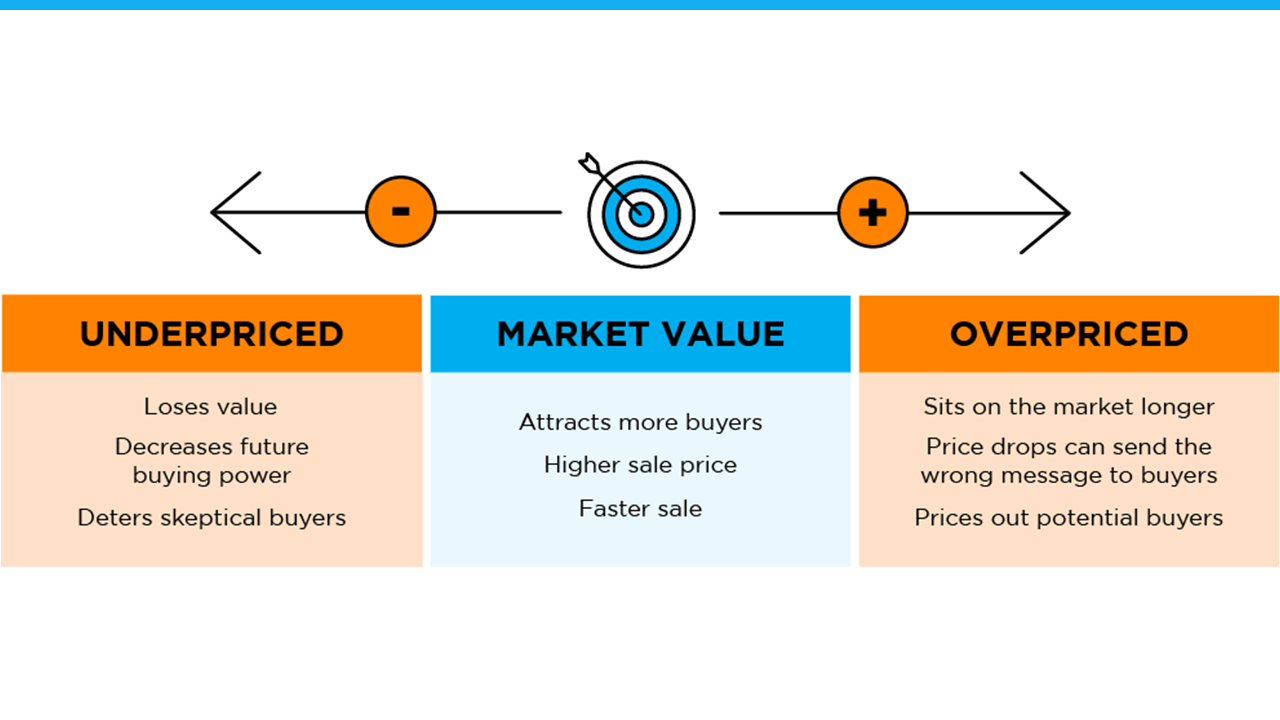
Your asking price sends a message to potential buyers, especially today.

If it’s priced too low, you may leave money on the table or discourage buyers who may see a lower-than-expected price tag and wonder if that means something is wrong with the home.

If it’s priced too high, you run the risk of deterring buyers. When that happens, you may have to lower the price to drive interest when your house sits on the market for a while. But be aware that a price drop can be seen as a red flag by some buyers who will wonder what it means about the home.

To avoid either headache, price it right from the start. A real estate professional knows how to determine the ideal asking price. They balance the value of homes in your neighborhood, current market trends, buyer demand, the condition of your house, and more to find the right price. This helps lead to stronger offers and a greater likelihood your house will sell quickly.

The visual below helps summarize the impact your asking price can have:

Bottom Line

Homes priced at the current market value are selling faster and at a better price right now. To make sure you price your house appropriately, maximize your sales potential, and minimize your hassles, let’s connect today.

Posted in Selling Your Home
April 12, 2023

Your Tax Refund Can Help You Achieve Your Homebuying Goals


Have you been saving up to buy a home this year? If so, you know there are a variety of expenses involved – from your down payment to closing costs. But there’s good news – your tax refund can help you achieve your goals by paying for some of these expenses.

SmartAsset estimates the average American will receive a $1,798 tax refund this year. The map below provides a more detailed estimate by state:

According to Freddie Mac, there are multiple ways your refund check can help you as a homebuyer. If you’re getting a refund this year and thinking about buying a home, here are a few tips to keep:

  • Saving for a down payment – One of the largest barriers to homeownership is saving for a down payment. You could reach your savings goal more quickly than expected by using your tax refund to help with your down payment.
  • Paying for closing costs – You have to pay fees to your lender, real estate agent, and other parties involved in the homebuying transaction before you can officially take ownership of your home. You could direct your tax refund toward these closing costs.
  • Lowering your interest rate – Your lender might give you the option to buy down your mortgage interest rate during the homebuying process. That means, you could pay upfront to have a lower interest rate on your fixed-rate mortgage.

The best way to prepare to buy a home is to work with a trusted real estate professional who understands the process. They’ll help you navigate the costs you may encounter as you begin your homebuying journey.

Bottom Line

Your tax refund can help you reach your goals of homeownership. Let’s connect to discuss how you can start your journey today.

Posted in Buying a Home
April 11, 2023

The Big Advantage If You Sell This Spring


Thinking about selling your house? If you’ve been waiting for the right time, it could be now while the supply of homes for sale is so low. HousingWire shares:

“. . . the big question is whether we are finally starting to see the seasonal spring increase in inventory. The answer is no, because active listings fell to a new low last week for 2023 . . .”

The National Association of Realtors (NAR) confirms today’s housing inventory is low by looking at the months’ supply of homes on the market. In a balanced market, about a six-month supply is needed. Anything lower is a sellers’ market. And today, the number is much lower:

“Total housing inventory registered at the end of February was 980,000 units, identical to January and up 15.3% from one year ago (850,000). Unsold inventory sits at a 2.6-month supply at the current sales pace, down 10.3% from January but up from 1.7 months in February 2022.”

Why Does Low Inventory Make It a Good Time To Sell?

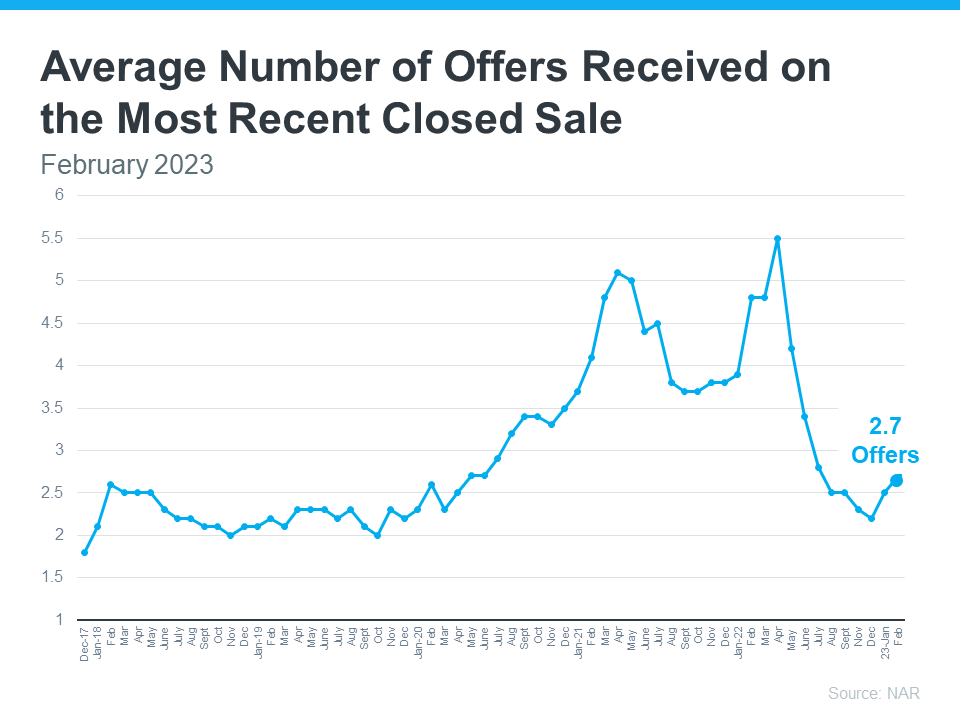
The less inventory there is on the market when you sell, the less competition you’re likely to face from other sellers. That means your house will get more attention from the buyers looking for a home this spring. And since there are significantly more buyers in the market than there are homes for sale, you could even receive more than one offer on your house. Multiple offers are on the rise again (see graph below):  

If you get more than one offer on your house, it becomes a bidding war between buyers – and that means you have greater leverage to sell on your terms. But if you want to maximize the opportunity for a bidding war to spark, be sure to lean on your expert real estate advisor. While we’re still in a strong sellers’ market, it isn’t the frenzy we saw a couple of years ago, and today’s buyers are focused on the houses with the greatest appeal. Clare Trapasso, Executive News Editor at Realtor.com, explains:

"Well-priced, move-in ready homes with curb appeal in desirable areas are still receiving multiple offers and selling for over the asking price in many parts of the country. So, this spring, it's especially important for sellers to make their homes as attractive as possible to appeal to as many buyers as possible.”

Bottom Line

If you’ve been waiting for the right time to sell your house, low inventory this spring sets you up with a big advantage. Let’s connect today to make sure your house is ready to sell. 

Posted in Selling Your Home
April 10, 2023

Homebuyer Activity Shows Signs of Warming Up for Spring


The spring season appears to be warming up in housing as more and more buyers enter the market. And after rising mortgage rates sidelined so many buyers last year, that’s a good sign for sellers. Realtor.com has the latest:

“Spring is officially here, and like green shoots emerging from the bleak winter, new data suggests that more buyers are back in the market, although more subdued compared to a year ago.”

We know buyer activity is trending up because of mortgage purchase application data. According to Investopedia:

“A mortgage application is a document submitted to a lender when you apply for a mortgage to purchase real estate.”

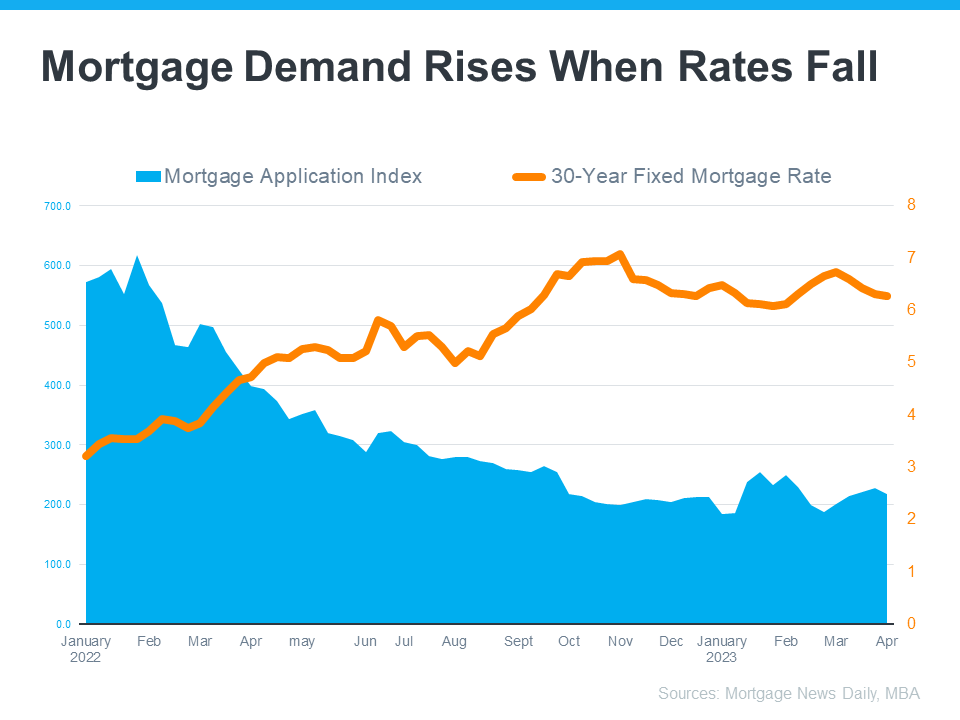
That means the number of mortgage applications shows how many buyers are applying for mortgages. Put another way, an increase in mortgage applications means an increase in buyer demand – and as Joel Kan, VP and Deputy Chief Economist at the Mortgage Bankers Association (MBA), explains, application activity started ramping up as mortgage rates fell steadily in March:

“Application activity increased as mortgage rates declined . . . recent increases, along with data from other sources showing an uptick in home sales, is a welcome development.”

In fact, we can see how mortgage rates have a direct impact on applications over time. As rates rose dramatically last year, applications fell in response (see graph below):


The recent uptick in mortgage applications, as well as the decline in mortgage rates, is good news for sellers because it means more buyers are actively looking for homes.

What This Means for You

Buyers are coming this spring, which is typically the busiest time of the year in real estate. And as Realtor.com tells us, if you’re a seller, you need to prepare:

“If homeowners are planning to sell in 2023, now is the time to get ready.”

The means working with a local real estate agent to maximize your home’s appeal and get it listed at the ideal price for your area.

Bottom Line

The housing market is warming up for spring. If you’re thinking about selling your house and taking advantage of this recent uptick in buyer activity, let’s connect.